When June's puppy coat started to change, it happened fast. One week she was a soft, wavy puppy, and the next there were tangles behind her ears, in her armpits, and right along her collar line that the cheap pin brush I owned could not touch. The pins just rode over the top of the coat and pulled at the knots, and June let me know she hated it. By February 2024, when she was about six months old, I had ordered the Chris Christensen Big G slicker brush, mostly out of desperation. Two and a half years later, it is still the brush I reach for three or four evenings a week.
I am a dental hygienist, not a groomer, and I say that up front because everything in this review comes from trial and error in my living room, not from a salon chair. June is a standard Aussiedoodle, about 48 pounds, with the kind of wavy-curly coat that mats if you look at it wrong. This is how the Big G has held up for us, what it can and cannot do, and who I would and would not recommend it to.
The Quick Verdict
The Big G reaches the skin without scraping, glides through a sprayed section of wavy-curly coat, and has survived two and a half years of steady use. It will not dissolve a solid mat, and you still need a comb check afterward. For daily line brushing, it is the best tool I have owned.
Amazon Check Today's Price →The brush that finally made line brushing stick
After two and a half years and hundreds of sessions on the living-room floor, the Chris Christensen Big G is the tool I reach for every single time. Check today's price on Amazon.
Amazon Check Today's Price on Amazon →How I've Used It
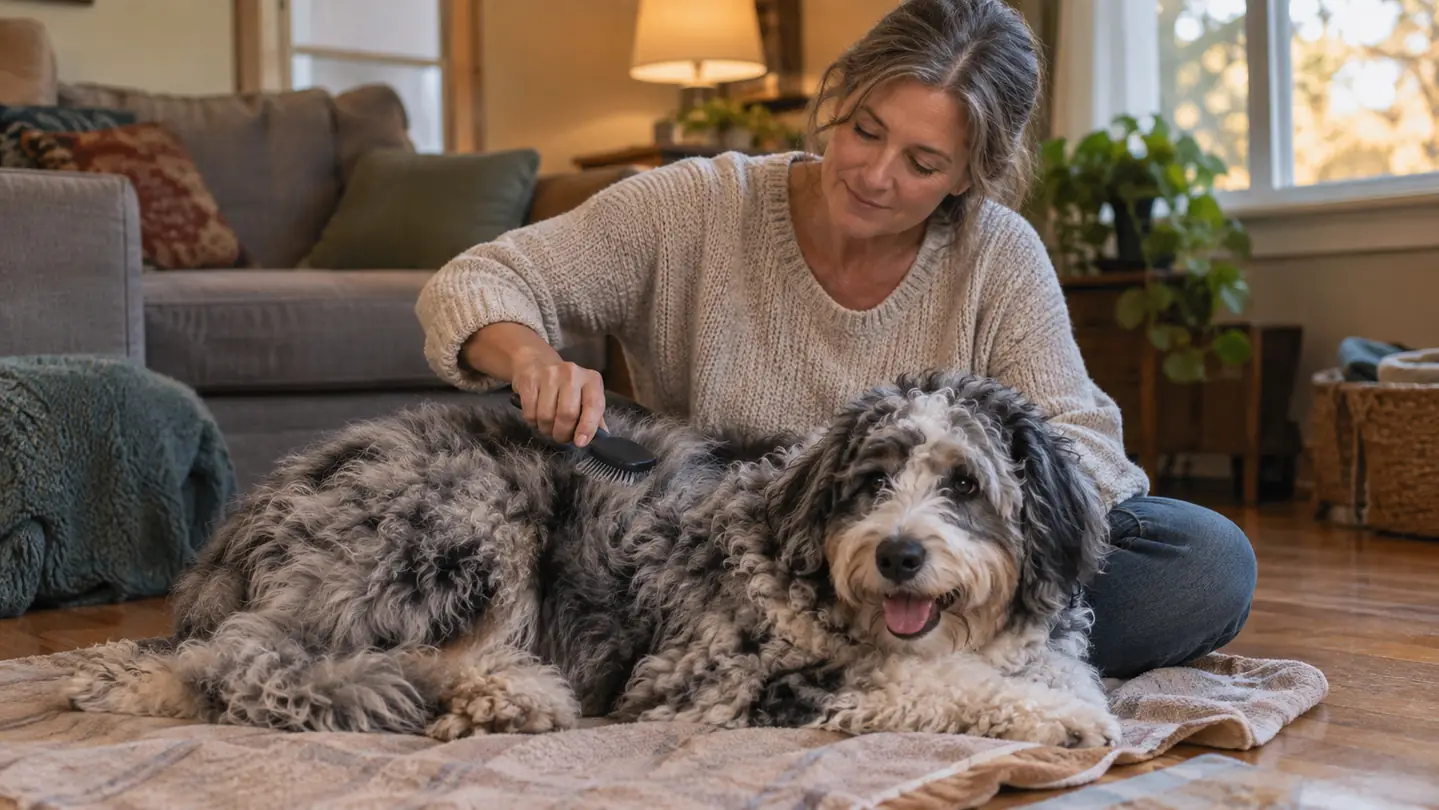
The brush arrived in February 2024, and the routine has been the same since the spray joined it that April. Three or four evenings a week, June lies on an old towel on the living-room floor while I work through her coat in small sections. I start with a light mist of the TropiClean detangler spray on the spots that mat first, mostly behind her ears, in her armpits, and along the collar line. Then I take a small section of coat, hold it up, and brush from the skin outward. That is the line brushing method, and it is the only way I have found to actually get a slicker down to the skin on a coat like hers.
The whole session runs 15 to 20 minutes. I brush with a light hand, because the pins are long and flexible and they can reach the skin without scraping if you let them do the work. When a section feels smooth, I check it with a plain steel comb I already owned. If the comb glides through, the section is done. If it snags, I go back over it with the brush before moving on.
I am not gentle because I am patient. I am gentle because the brush makes it easy. June used to twist away from the old pin brush after a few minutes. Now she lies down for the whole session, and my groomer has told me more than once that the brushing in between appointments is the reason June has never needed to be shaved down.
Why the Big G Works on a Wavy-Curly Coat
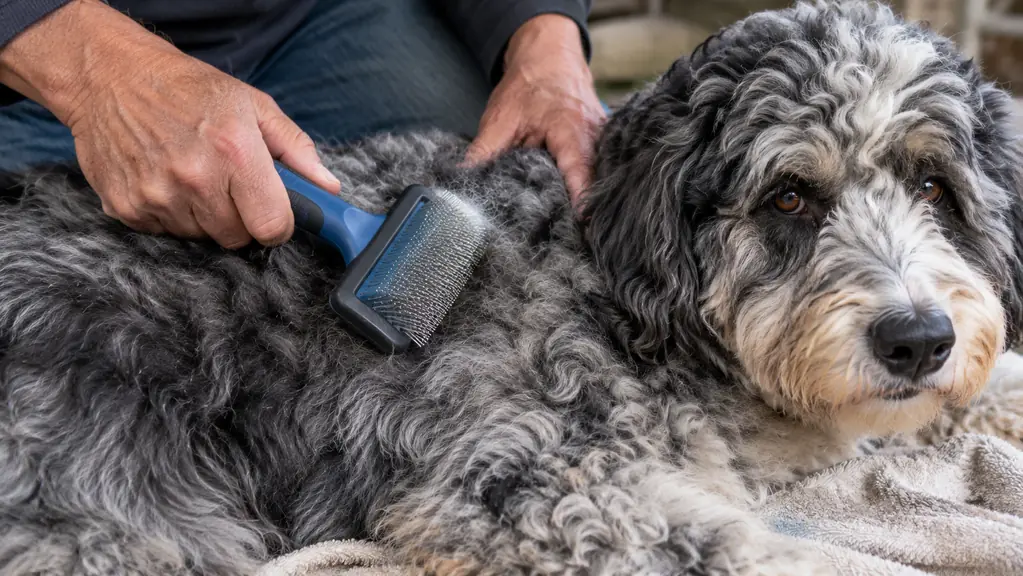
The thing that surprised me most is how the brush feels against the skin. The Big G has long, flexible metal pins set into a cushioned pad, and that pad is the whole difference. On a wavy-curly coat, a stiff brush bounces off the surface and only fluffs the top layer, which is exactly what my old pin brush did. The cushioned pad lets the pins follow the shape of June's body, so they reach down to the skin in places where the coat lies flat, like her shoulders and her hips.
Reaching the skin matters because that is where mats start. June's tangles begin at the base of the coat and work their way out, so a brush that only skims the surface is not brushing at all. With the Big G, I can feel the difference between a clean section and one that still has a knot at the bottom, because the pins travel all the way down before the pad stops them.
None of that happens by itself, and I want to be clear about that. The brush works because I spray first, brush in small sections, and check with the comb. What the Big G does is make that routine actually work on a coat that would otherwise defeat a lesser brush. It does not remove a solid mat on its own, and I would not ask it to.
The Learning Curve, and What I Got Wrong at First
I did not get this right on day one. My first instinct was to brush June the way I would brush my own hair, long strokes from the top of the coat down. That is exactly the wrong move on an Aussiedoodle. It flattened the curls, skipped the undercoat, and left the tangles behind her ears completely untouched. The brush was fine. My technique was the problem.
The fix came from watching my groomer work. She brushes in tiny sections, never more than an inch or two wide, and she goes down to the skin every time. When I copied that at home, the Big G suddenly made sense. The long pins on the cushioned pad are built for exactly this, working one small section at a time, and once I stopped trying to brush the whole coat in one pass, the mats behind June's ears stopped winning.
I also learned to use the detangler spray properly. A light mist on a dry or barely damp section, not a soak. Too much spray leaves the coat slick and the brush slides without actually separating the hairs. The right amount makes the pins glide while still catching the tangles. It took me a few weeks to find that balance, and I mention it because a slicker brush is only as good as the routine around it.
How It Has Held Up Over Two and a Half Years
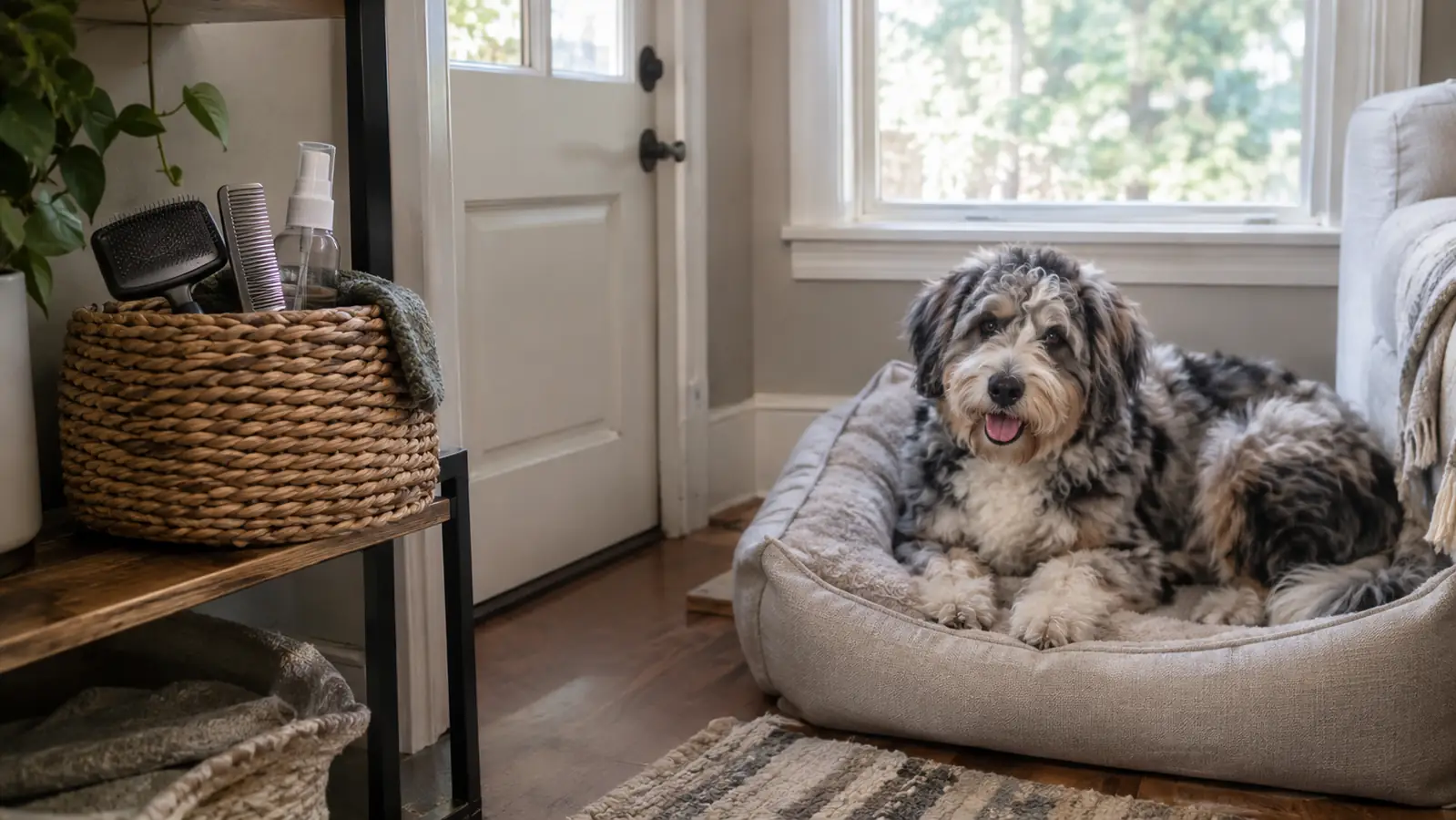
I bought the Chris Christensen Big G in February 2024, and it has been used three or four evenings a week since. That is hundreds of sessions, on a dog who lies on a towel on the living-room floor while I brush. The pins are still straight, none have pulled out of the pad, and the lightweight coral handle has never cracked or loosened. I keep it in a basket on the shelf by the back door with my steel comb and the spray, and it still looks and feels like the day it arrived.
The only wear I can point to is cosmetic. The handle has a few small scuffs from being dropped onto the floor, and the pad shows light use if you look closely. Neither has changed how it brushes. I have never had to replace a pin, and I have never once thought about buying a second brush. For something used this often, that durability is the quiet part of the review.
One thing I will note: the brush lives in a basket by the back door, not in a drawer. That was a small change I made early on, and it is the reason the routine stuck. When the brush, the comb, and the spray are already sitting where June and I end up every evening, brushing happens. When gear is tucked away, it does not.
Where the Big G Falls Short
It cannot remove a solid mat. I want to put that at the top of this section, because it is the most common misunderstanding about slicker brushes. If June comes in from a weekend of trail walks with a felted tangle behind her ear, the Big G is not going to brush it out. I have tried, and the result is a frustrated dog and a tangle that is tighter than when I started. Those mats go to my groomer, and that is the honest division of labor.
It is also not a cheap brush, and it will not make sense for every household. If your dog has a short, smooth coat that never mats, you do not need a brush at this level, and I would tell you to save your money. And even for a coat like June's, the Big G is one part of a system. You still need a spray, a comb, and the willingness to brush several times a week. The brush makes the work easier. It does not do the work for you.
The last thing I will say here is that I cannot judge the brush on a solid mat, because I stopped letting mats get that far. By the time I find a tangle, it is usually still loose enough for the spray and the slicker to sort out. The moment a tangle stops loosening, I stop brushing it and make an appointment. That is the honest limit of what any slicker can do.
How It Compares to What I Used Before
Before the Big G, I used a cheap pin brush I bought when June came home. It was fine for fluffing June's puppy coat, and useless once that coat changed. The pins were too short and too stiff to reach the skin, and the whole brush bounced over the surface instead of working through the coat. I also briefly handled a dematting rake at my groomer's once, and it has a real job to do on mats, but it is not a daily brushing tool the way a slicker is.
I have not owned any other slicker, so I cannot give you a long-term comparison between the Big G and a dozen rivals. What I can tell you is that I have never felt the need to try another one. The brush does what I need it to do, it has lasted, and I have stopped looking. For a coat like June's, that consistency is worth more than any feature list.
What I Liked
- Long, flexible pins on a cushioned pad reach the skin without scraping, even on a wavy-curly coat
- Lightweight handle stays comfortable through a 15 to 20 minute session
- Built to last: two and a half years of three or four evening sessions a week, and the pins are still straight
- Makes line brushing practical on a coat that mats behind the ears, in the armpits, and along the collar line
- Works with a spray and a comb check to keep a groomer from having to shave the coat down
Where It Falls Short
- Will not remove a solid or felted mat; those still go to the groomer
- Costs more than a basic drugstore brush, and a smooth-coated dog will not need it
- You still need a detangler spray and a steel comb to get the full benefit
- There is a real learning curve if you have never line brushed before
Two and a half years, three or four evenings a week, and June has never needed to be shaved down. That is the whole review.
Who This Is For
The Big G is for owners of dogs with wavy or curly coats, the kind that mat behind the ears, in the armpits, and along the collar line. That includes Aussiedoodles, Goldendoodles, Labradoodles, and poodles, which is exactly the list on the box. It is also for owners who are willing to brush several times a week and want a tool that makes that time count. If you already line brush, or you are ready to learn, this brush will not hold you back.
It is especially worth it if you have a young dog going through the puppy coat change, because that is when the cheap brushes stop working and the mats start winning. June was about six months old when hers began, and the Big G arrived right as I needed it most. If I had waited another month, I think we would have started our groomer visits with a shave-down instead of a trim.
Who Should Skip It
Skip it if your dog has a short, smooth coat that does not mat. A basic brush will do the job, and you will be paying for reach and flexibility you will never use. Skip it if you are not going to brush regularly, because no slicker fixes a coat that only gets attention once a month. And skip it if you are hoping for a brush that removes solid mats by itself. That tool does not exist, and the Big G is honest about being part of a routine, not a replacement for one.
I would also say this to anyone on a tight budget: a mid-range slicker plus a steel comb plus a spray will get you most of the way there. The Big G is a lasting tool and I would buy it again, but the routine matters more than the brand. If you are not ready to commit to the routine, no brush is going to save you.
The brush I would buy again tomorrow
If your dog's coat mats behind the ears and in the armpits, the Chris Christensen Big G is the slicker I have reached for every week for two and a half years. Check today's price on Amazon.
Amazon Check Today's Price on Amazon →