
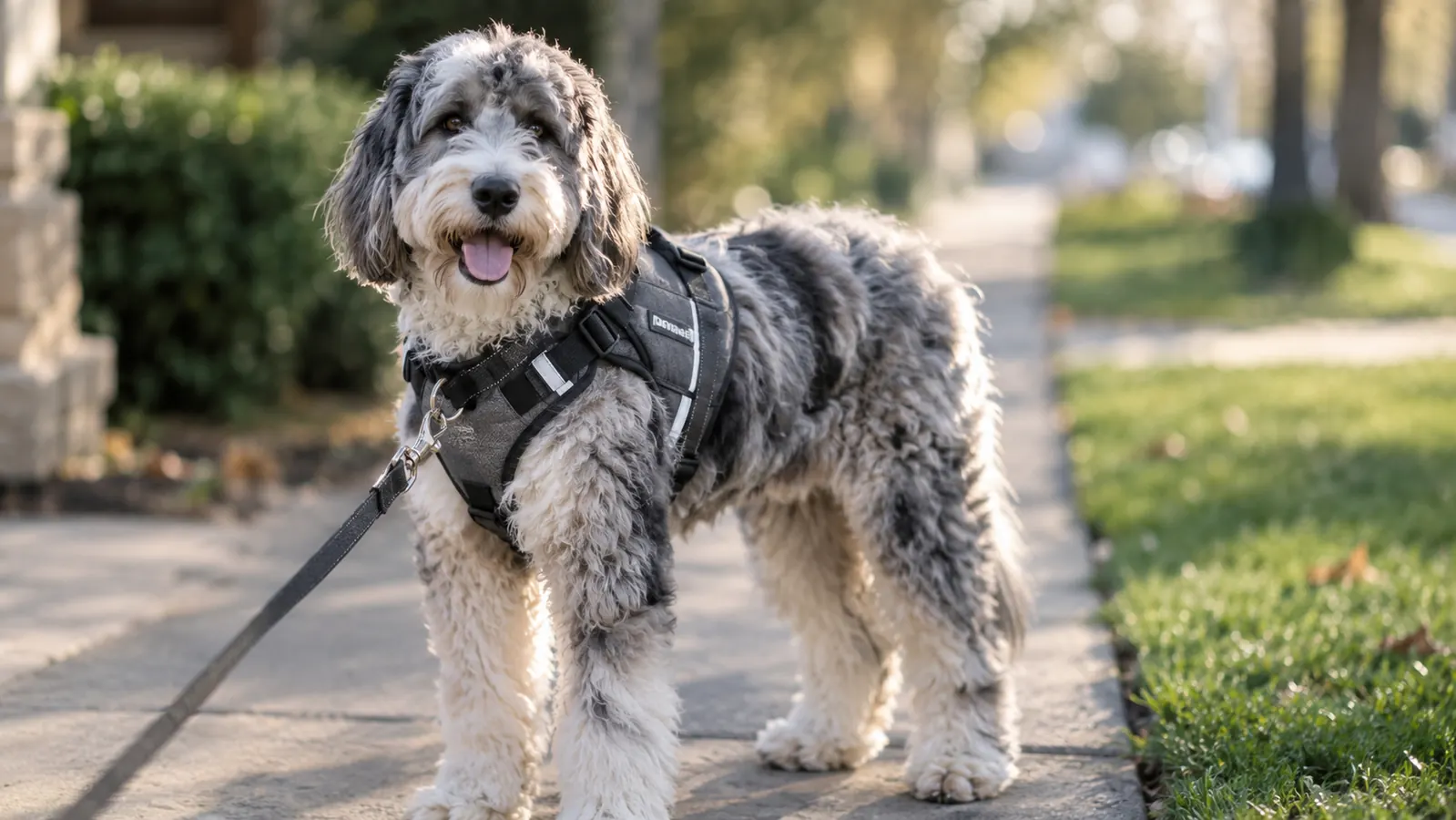
June was about seven months old when I realized I was dreading our morning walk. She is a standard Aussiedoodle, 48 pounds of smart, bouncy, curly energy, and on a flat collar she pulled like she was being paid by the mile. My shoulder ached, my arm was always tired, and I spent half the walk saying "easy" in a voice that was getting less patient by the day. I am Carla, by the way. I am a dental hygienist, not a trainer, and I needed a tool that would make walks feel like walks again.
In March 2024 I bought the rabbitgoo No Pull Harness in size L, and it has been on June for nearly every walk since. It replaced the flat collar she had worn since she came home at ten weeks old, and it was the first piece of walking gear I actually felt in control with. Two and a half years later, through muddy trails, humid Tennessee summers and a puppy who thought pulling was a sport, here is the long-term review I wish someone had given me before I bought it.
The Quick Verdict
The rabbitgoo No Pull Harness is a well-padded, adjustable front-clip harness that turned my pulling Aussiedoodle around within the first week. It is a walking tool, not a training fix, and the strap line needs a quick brush after walks, but for daily use it has held up far better than I expected.
Amazon Check Today's Price →Stop Bracing Yourself on Every Walk
The front clip on the rabbitgoo No Pull Harness turns a pulling dog back toward you instead of dragging you down the block. It worked for my 48-pound Aussiedoodle, and it is still going strong after two and a half years of daily use.
Amazon Check Today's Price on Amazon →How I've Used It
The rabbitgoo harness has two leash clips, and I use both, just for different jobs. The front clip is for our neighborhood walks, about 45 minutes most mornings before my shift. When June lunges after a squirrel or tries to drag me toward a smell, the front clip turns her body back toward me, so she lands facing me instead of pulling away. It does not yank her or hurt her, it just makes pulling feel awkward, and that is exactly what a no-pull tool should do. The first morning I used it, she charged after a neighbor's cat and ended up facing me mid-stride, looking genuinely confused that her usual trick had not worked.
The back clip is for weekend trail walks with my husband Dale. On a wide trail where June can trot ahead without tension, the back clip is more comfortable for her and gives her a little more freedom. I switch clips depending on the walk, and the harness makes that easy. It takes me about ten seconds to move the leash from one clip to the other. Dale used to brace himself when he took June out on Saturdays. Now he clips her to the back and lets her range a few feet ahead on the trail, and he says it is a completely different walk.
June wears the harness for every walk, and it hangs on a hook by the front door when she is not wearing it. I hand wash it in the sink when it gets muddy and let it hang dry. It has been through rain, mud, creek water and one enthusiastic roll in something I did not inspect closely, and it still looks and works the way it did the week I bought it. The buckles still click clean, the straps still hold their adjustment, and the reflective strips still catch the light. I expected to replace it by now, and I have not had a reason to.
The routine looks the same almost every day. I grab the harness off the hook, June hears the buckles click and starts doing her little dance by the door, and we head out while the street is still quiet. In the summer that means 6:15 with the sun already up and the humidity building. In the winter it means dark mornings, and that is when I am glad for the reflective strips. The harness is the last thing I put on her before the leash, and it has been that way for two and a half years.
What the Front Clip Actually Does
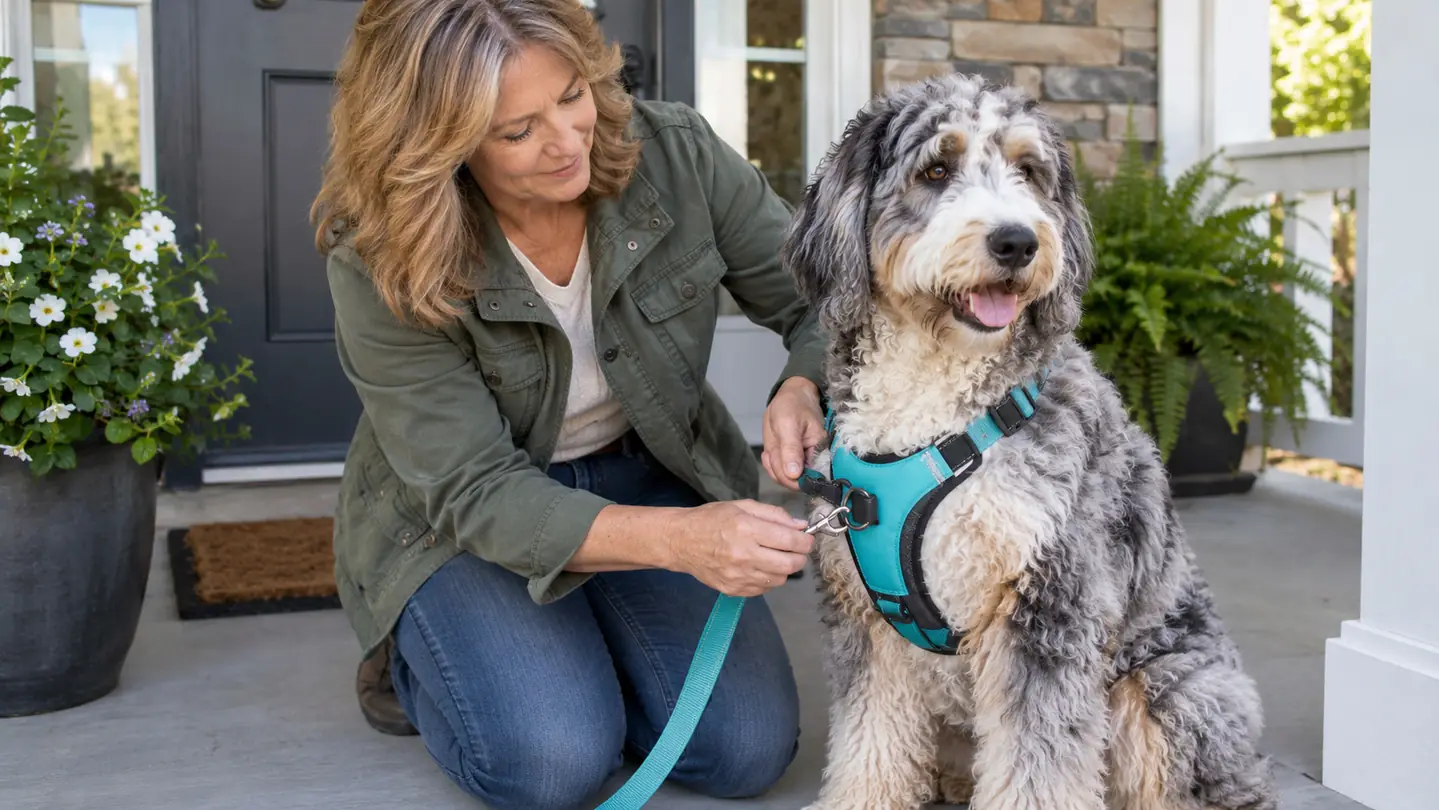
Here is the honest version of how a front-clip harness works, because the marketing makes it sound like magic and it is not. When a dog pulls on a front clip, the leash pressure comes from the front of the chest, so the dog's own forward motion turns her around. She ends up facing you, the tension drops, and she learns, pretty quickly, that pulling does not get her where she wants to go. The physics are simple, but the effect on a daily walk is not small.
With June, the change was noticeable within the first week. The first few mornings, she would pull, hit the end of the leash, and turn around to face me with a look that said she was not sure what had just happened. She did not stop being an excited young dog, and she still lunges at squirrels sometimes. But the harness gave me a way to redirect her without yanking her neck, and that changed our walks more than any collar ever did. By the time she was about a year old, our morning walks were calm, and I credit the rabbitgoo harness for a lot of that.
I remember the morning it clicked. We were rounding the corner onto the main road, and June spotted a squirrel on the telephone line. She planted her feet and threw her whole 48 pounds into the leash, the way she always had on her flat collar. Instead of the collar digging into her neck and her momentum carrying us both forward, the front clip turned her clean around to face me. She sat down, looked at me, and waited, and that was the first walk where I felt like we were a team instead of a tug of war. It did not fix every walk overnight, and she still tried to pull toward interesting smells for months. But that moment showed me the harness could do the one job I needed it to do.
I want to be clear about one thing: the harness is a tool, not training. It made pulling less rewarding, and it gave me better control, but it did not teach June to walk politely on its own. The calm walks came from consistency, patience and a dog who matured out of her worst pulling phase. The harness just made the process bearable, and it kept my shoulder from giving out while we got there. I also want to say that the harness did not make June stop pulling entirely, and anyone who promises you that is selling something. What it did was give us a calmer start to every walk, and that mattered more than I can explain to anyone who has not lived with a 48-pound dog who thinks every walk is a race.
How It Fits and What It's Made Of
The rabbitgoo is a padded vest-style harness with adjustable straps and reflective strips. I bought size L for June when she was about 48 pounds, and the fit has been easy to dial in. The straps adjust at the chest and behind the shoulders, so it sits snugly without digging in, and I can fit two fingers under the straps the way I was taught to check a collar. The first time I put it on her, she stood still for the whole adjustment, which surprised me, because she was not a dog who liked things put over her head at that age. I tightened the chest strap, checked the shoulder strap, and the harness stayed put through her first shake, which is the real test with any dog gear.
The padding is the feature I did not expect to care about. June has a wavy-curly coat that mats behind her ears, in her armpits and along her collar line, and I was worried a harness would rub those spots raw. The padded panels spread the pressure out, and in two and a half years I have never seen a rub mark or a sore spot from the harness itself. That matters more than it sounds like. June has never been shaved, and keeping her coat from rubbing into tangles is half the reason I brush her three or four evenings a week. A harness that sat hard against her skin would have undone all of that work by now.
The reflective strips are a small thing that matters more than I thought they would. We walk in the early morning before my shift, and in the winter it is still dark. The strips catch car headlights, and they give me a little more peace of mind when June and I are crossing a road at dawn. One December morning, a truck came around the curve before I heard it, and the driver slowed well before he reached us. I do not know how much of that was the strips, but I noticed he saw us from a distance, and I have been glad of them ever since. The strips are stitched on and have survived two and a half years of daily wear, which is more than I expected from trim like that.

The One Thing I Have to Stay On Top Of
Here is what nobody tells you about a vest-style harness on a curly dog: the strap line can rub curls into tangles. June's armpits and the sides of her chest are exactly where her coat mats, and the harness sits right on those spots. If I put the harness on a brushed dog and then skip brushing for a few days, I find little tangles starting along the strap line. It happened for real one week last fall. We had a stretch of rainy mornings, and I let the brushing slide for four days. When I finally ran my hand along her chest, I found a mat the size of a quarter right where the front strap crosses her. It took me twenty minutes and a lot of detangler to work it out, and I have not skipped that spot since.
My fix is simple, and it is now part of our routine. After a walk, I run my fingers along the strap line and give the armpits and chest a quick brush before the tangles have a chance to start. It takes two minutes, and it means June's groomer does not have to shave her down. June has never been shaved, and I would like to keep it that way. The brush I use for that spot is the same slicker I use for the rest of her coat, the one with the long flexible pins, and it slides through the curls without scraping her skin. I keep it in the basket by the back door with her comb and her detangler spray, so the whole routine lives in one place.
This is not a flaw in the harness, exactly. Any harness that sits against a curly coat is going to do this, and a flat collar can rub the collar line too. It is just a reality of owning a dog with this kind of coat, and it is easy to manage if you know it is coming. I would rather have a padded harness I can check in two minutes than a thin strap that digs into her skin, and I have never once thought about switching back to her collar for walks. The tangle check is a small price for walks that do not end with my shoulder aching.
What I Liked
- Front clip turns a pulling dog back toward you without yanking the neck
- Padded panels spread pressure and never caused a rub mark on my dog
- Adjustable straps fit my 48-pound Aussiedoodle snugly and stayed put
- Reflective strips help on early-morning walks in the dark
- Back clip gives a comfortable option for trail walks with no tension
- Held up through two and a half years of daily use, rain and mud included
Where It Falls Short
- The strap line can rub curls into tangles on a curly-coated dog if you skip brushing
- It is a walking tool, not training, so it will not fix pulling on its own
- I have to switch the leash between clips depending on the walk, which takes a few seconds
The front clip turned June back toward me within the first week, and two and a half years later the harness still fits, still holds, and still makes our morning walks feel like walks.
Who This Is For
The rabbitgoo No Pull Harness is for owners of medium to large dogs who are tired of being dragged down the street and want a tool that helps right away. If your dog pulls on a flat collar, if your shoulder aches after walks, or if you have a smart, bouncy dog who needs to learn that pulling does not work, this harness is a solid place to start. It will not replace training, and it will not make a reactive dog calm, but it will make the daily mechanics of walking easier from the first time you clip it on.
It is also a good fit if you want one harness that does double duty. The front clip handles neighborhood walks where you need control, and the back clip works for trail walks or relaxed outings where your dog can trot ahead. I use both clips every week, and I would not want to give up either one.
Who Should Skip It
Skip the rabbitgoo harness if you are looking for a training program, because a harness cannot do that job. If your dog pulls hard enough to choke herself, or if pulling is part of a bigger behavior problem like fear or reactivity, talk to a trainer. The harness will make walks more manageable, but it will not fix the underlying issue. And if your dog is small enough that a padded harness feels like a coat, the fit may never feel right, so measure your dog before you order and check the sizing guide carefully.
I would also think twice if you have a dog with a very sensitive coat or skin. The strap line can rub curls into tangles on a curly-coated dog, and while that was easy for me to manage with a quick brush after walks, it is one more thing to stay on top of. If you are not going to brush along the strap line, the tangles will win. And if your dog hates wearing anything, even a padded harness can feel like a lot at first. June got used to hers in a few days, but a dog who panics in gear needs a slower introduction, not a quick fix.
Give Your Shoulder a Break
Two and a half years of daily walks, one rabbitgoo No Pull Harness, and a front clip that still turns my Aussiedoodle around every time she tries to pull. If your walks feel like a tug of war, this is the tool I would buy again.
Amazon Check Today's Price on Amazon →