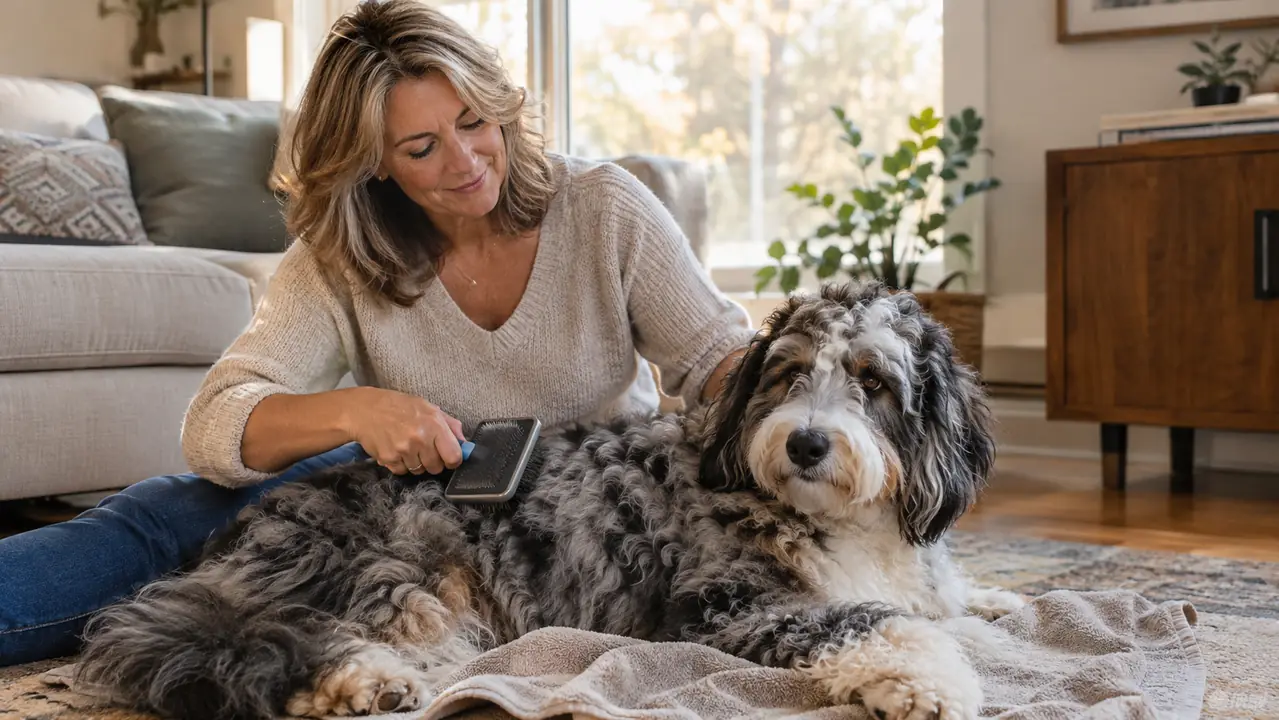
Nobody tells you that the brush everyone recommends will not fix a mat by itself. I learned that the hard way in the winter of 2024, when June, my standard Aussiedoodle, was about six months old and her puppy coat started changing. Behind her ears, under her armpits and along her collar line, the curls were turning into felted clumps that made her flinch when I touched them. I had a cheap pin brush from the grocery store, and it was losing the fight. That is when I ordered the Chris Christensen Big G Slicker Brush, the large one with the coral handle. Two and a half years later, I still use it three or four evenings a week. This is the honest review I wish someone had given me before I bought it.
I want to be clear about who I am. I am not a groomer, a trainer or a vet. I am a dental hygienist in Knoxville, Tennessee, who owns one very smart, very bouncy Aussiedoodle and has spent the last two and a half years figuring out her coat. June sees a professional groomer about every eight weeks. My job is the brushing in between, so the groomer never has to shave her down. This review is about whether the Big G actually does that job, what it cannot do, and whether it is worth the money compared to the brushes you will find at any big-box pet store.
The Quick Verdict
The best slicker I have used on a wavy-curly Aussiedoodle coat, but it is not magic. It needs line brushing, a detangler spray and a comb check to do its real job, and it will not remove a solid mat on its own. If you want a brush that reaches the skin gently and cuts brushing time, this is the one.
Amazon Check Today's Price →The brush I reach for every single week
If your Aussiedoodle mats behind the ears and along the collar line like June does, the Chris Christensen Big G Slicker is the tool that finally made brushing work for me. It costs more than a drugstore brush, and I think it is worth it. Check today's price on Amazon and decide for yourself.
Amazon Check Today's Price on Amazon →How I've Used It
The Big G arrived in February 2024, the same week I finally admitted that June's puppy coat was changing and my cheap pin brush was not going to keep up. She was about six months old, and the first real mats were already forming behind her ears. I started with a routine I still follow: three or four evenings a week, on the living-room floor, with June lying on an old towel. I mist a section of her coat with a detangler spray, brush that section in small lines down to the skin, then check it with a plain steel comb.
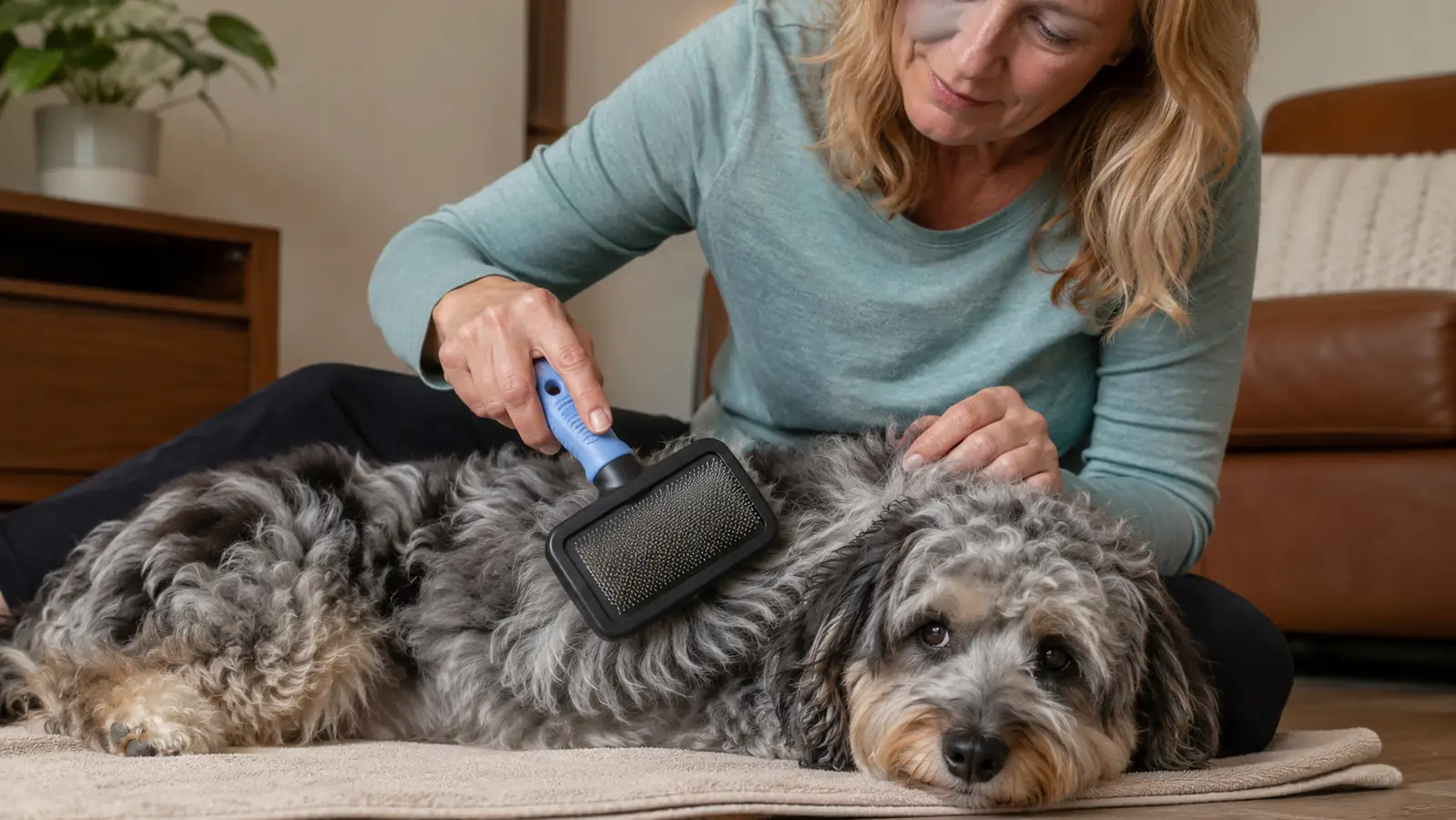
Line brushing is the part nobody talks about. You do not run the slicker over the top of the coat like you see in ads. You take a small section, hold it up, and brush from the skin outward in short strokes, working your way across the body a section at a time. The Big G's long, flexible pins on a cushioned pad are what make this possible. They reach down to the skin without scraping it, as long as I keep my hand light. It took me a few weeks to learn that touch. Press too hard and the pins will scratch, same as any slicker.
How long does a session take? Fifteen to twenty minutes on a 48-pound standard Aussiedoodle with a wavy-curly coat, most evenings. Some nights I only do the trouble spots, the ears, the armpits and the collar line. June is used to it now. She lies down and mostly sleeps through it. That was not true at the start. She squirmed for the first month, and the brush alone did not calm her. The routine, the spray, and the fact that I stopped yanking on mats is what made the difference.
What Nobody Tells You About the Pins
The first thing you notice about the Big G is the pins. They are long and flexible, set into a cushioned pad, and they look more like a serious grooming tool than anything I had owned before. The honest version of that observation is that they are intimidating at first. I was scared I would hurt June. What I learned is that the flexibility is the whole point. The pins bend and follow the shape of the dog's body, which is why they can reach the skin without digging into it. A stiff pin brush cannot do that.
There is a real learning curve, and nobody tells you that either. The Big G only feels gentle when you hold it at the right angle and use a light hand. The first two weeks I pressed the way I did with my old brush, and June pulled away. I had to slow down, shorten my strokes, and let the pins do the work. Once I did, she stopped pulling. If you are switching from a cheap brush, give yourself a few weeks to find the touch. The brush is not the problem. The old habits are.
One more honest note about the pins. They are metal, and metal against a matted coat makes a sound that will make your stomach drop the first few times. That sound is not the brush failing. It is the pins catching on tangles they are trying to work through. With spray and patience, the sound fades as the coat stays brushed. But I want you to know it exists, because nobody warned me, and I nearly sent the brush back the first week because I thought I was hurting her.
The Honest Truth About Dematting
Here is what I wish every review said in the first paragraph: the Chris Christensen Big G Slicker will not remove a solid mat by itself. If a mat is already felted tight against the skin, brushing it with any slicker will just pull and hurt the dog. I learned this the expensive way. In March of 2024, I found a mat behind June's left ear that I had missed for a few days, and I stood there brushing the same spot for ten minutes while she flinched. I got nowhere.
What actually works is the whole system. Detangler spray first, to add slip. Then the slicker in small sections, to loosen the coat. Then a plain steel comb, to find the tiny tangles the brush skipped. And for mats that are already tight, the groomer. June has never been shaved down, because I catch the mats early enough. But that is because I check her every evening, not because the Big G is a magic tool. Anyone who tells you a brush alone prevents mats is selling you something.
The good news is that the system works. Once I added the spray and the comb check, the mats behind June's ears, in her armpits and along her collar line stopped getting worse. They still form if I skip a week. They form faster in winter, when she wears a harness on walks and the strap line rubs her chest curls. But the Big G, used the right way, keeps them manageable. That is the honest job description. It is a tool that makes brushing work, not a replacement for brushing.
What It Replaced, and Why That Matters
Before the Big G, I brushed June with a cheap pin brush from the grocery store. It was fine for her puppy fluff, and it failed in two ways once her coat changed. The pins were too stiff to reach her skin, so I was only brushing the top layer of her coat while the underlayer matted underneath. And when the brush did catch a tangle, it yanked, which made June hate brushing. By the time I ordered the Big G, she would leave the room when she saw the brush.
The difference is not that the Big G is magic. It is that the pins are long enough and flexible enough to actually reach the skin, so line brushing does what it is supposed to do. June went from dodging the brush to lying down and dozing while I work through her coat. That is a bigger win than it sounds. A dog that tolerates brushing gets brushed. A dog that fights it gets matted. If you are brushing an Aussiedoodle, you are fighting the same battle, and the right tool genuinely changes it.
The Reality After Two and a Half Years
I have used the Big G for about two and a half years now, three or four evenings a week, fifteen to twenty minutes at a time. It still works like the day it arrived. The pins have not bent, the cushioned pad has not flattened, and the coral handle still feels solid in my hand. I am not gentle with my tools, and this brush has taken everything I have thrown at it, including the occasional drop on a tile floor. That kind of durability matters when you are brushing a bouncy dog who would rather be playing fetch.
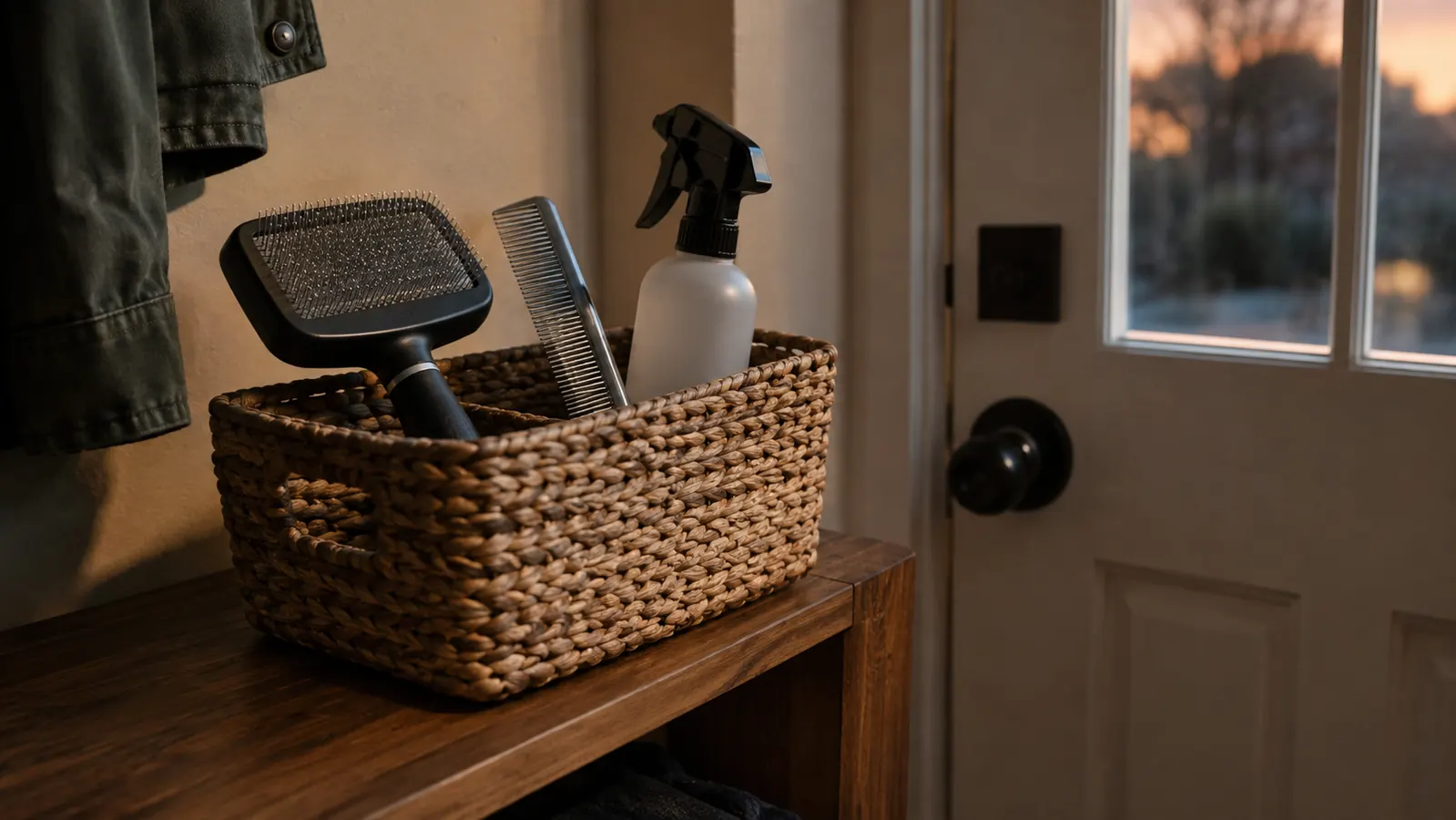
The maintenance is almost nothing. I rinse the pins under warm water every few weeks, let them dry, and that is it. The brush lives in a basket on the shelf by the back door with the comb and the spray, so I cannot skip brushing just because I would have to go find the tools. That sounds like a small thing, but it is the difference between a routine that happens and a routine that does not.
One thing I want to be honest about: the large size can feel like a lot of brush on a smaller dog. June is a 48-pound standard, and the large fits my hand and her body well. If you have a miniature Aussiedoodle, the smaller size might make more sense. I have only ever owned the large, so I cannot review the smaller one. I would just say to match the brush to your dog's size and ask your groomer what they use on dogs shaped like yours.
What Other Aussiedoodle Owners Ask Me
Since June and I have settled into this routine, a few friends at the dog park have asked whether the Big G is worth the upgrade from a regular slicker. My honest answer is that it depends on your dog's coat and your patience. If you have a straight-coated dog that barely mats, a cheaper brush will do. If you have a wavy-curly coat like June's, the difference shows up fast, mostly because the longer pins actually reach the skin and the cushioned pad keeps her comfortable while I work.
The other question I hear is about how often you really need to brush. The honest answer is more often than you want to, especially during coat change. June's worst matting happened between six and nine months old, when her puppy coat was coming out in patches. That is when the Big G earned its keep. If you have a puppy heading into that stage, I would not wait until the mats are tight to buy a proper brush. Start the routine early and the brush will feel like a normal part of the evening, not a rescue mission.
What I Liked
- Long, flexible pins reach the skin without scraping when you use a light hand
- Cushioned pad makes long brushing sessions comfortable for the dog
- Lightweight handle is easy on the wrist during a 20-minute session
- Cuts brushing time on a wavy-curly coat once you learn line brushing
- Still works like new after two and a half years of use three or four evenings a week
- Pairs well with a detangler spray and a steel comb check
Where It Falls Short
- Will not remove a solid mat by itself, no matter what the marketing implies
- Costs more than the brushes at a big-box pet store
- Takes a few weeks to learn the right angle and pressure
- Large size may feel unwieldy on a small or miniature dog
- Metal pins can scratch if you press too hard, especially on a wiggly puppy
- Needs a comb check afterward to catch the tangles it skips
The Big G did not stop June's mats by itself. It made the brushing that prevents them actually work, and that changed everything.
Who This Is For
The Chris Christensen Big G Slicker is for owners who are ready to brush their Aussiedoodle on a schedule, not for people looking for a tool that fixes the coat for them. If you have a puppy whose adult coat is starting to come in, if your dog mats behind the ears and along the collar line, and if you are willing to spend fifteen minutes a few evenings a week working in sections, this brush will make that time count. It is also for people who want to keep their dog out of a full shave-down between groomer visits. June is proof that a home brushing routine works, and the Big G is the tool that made my routine stick.
It is especially good for the wavy-curly coat that most Aussiedoodles have, the kind that looks low-maintenance from across the room and turns out to be anything but. If you are already doing line brushing with a cheap brush and it is not working, the Big G is the upgrade that will actually show up in your evenings. And if you brush a standard-sized dog, the large size will fit your hand well.
Who Should Skip It
Skip the Big G if you are not going to brush on a regular schedule. No brush on the market prevents mats if it stays in the basket. If you are hoping for a tool that will fix a felted mat the day before a groomer visit, this is not it, and you will be disappointed. The honest answer is that tight mats need a professional. I say that as someone who has stood in my living room trying to brush a mat that was already too far gone, with a perfectly good slicker in my hand. It did not work, and it hurt June's feelings.
I would also steer someone with a miniature or toy Aussiedoodle toward the smaller size, and someone who wants a single tool to do everything should know that the Big G works best as part of a kit. You will still need a detangler spray for slip and a steel comb for the final check. If that sounds like too much, a groomer every eight weeks will carry the load, and the brush is optional. The Big G is for owners who want to be part of the maintenance, not for owners who want to skip it.
A brush you will still be using next year
Two and a half years in, the Chris Christensen Big G Slicker is still the brush I reach for three or four evenings a week. It is not magic, it needs the right routine, but it has earned its place in the basket by the back door. If that sounds like what your Aussiedoodle needs, check today's price on Amazon.
Amazon Check Today's Price on Amazon →