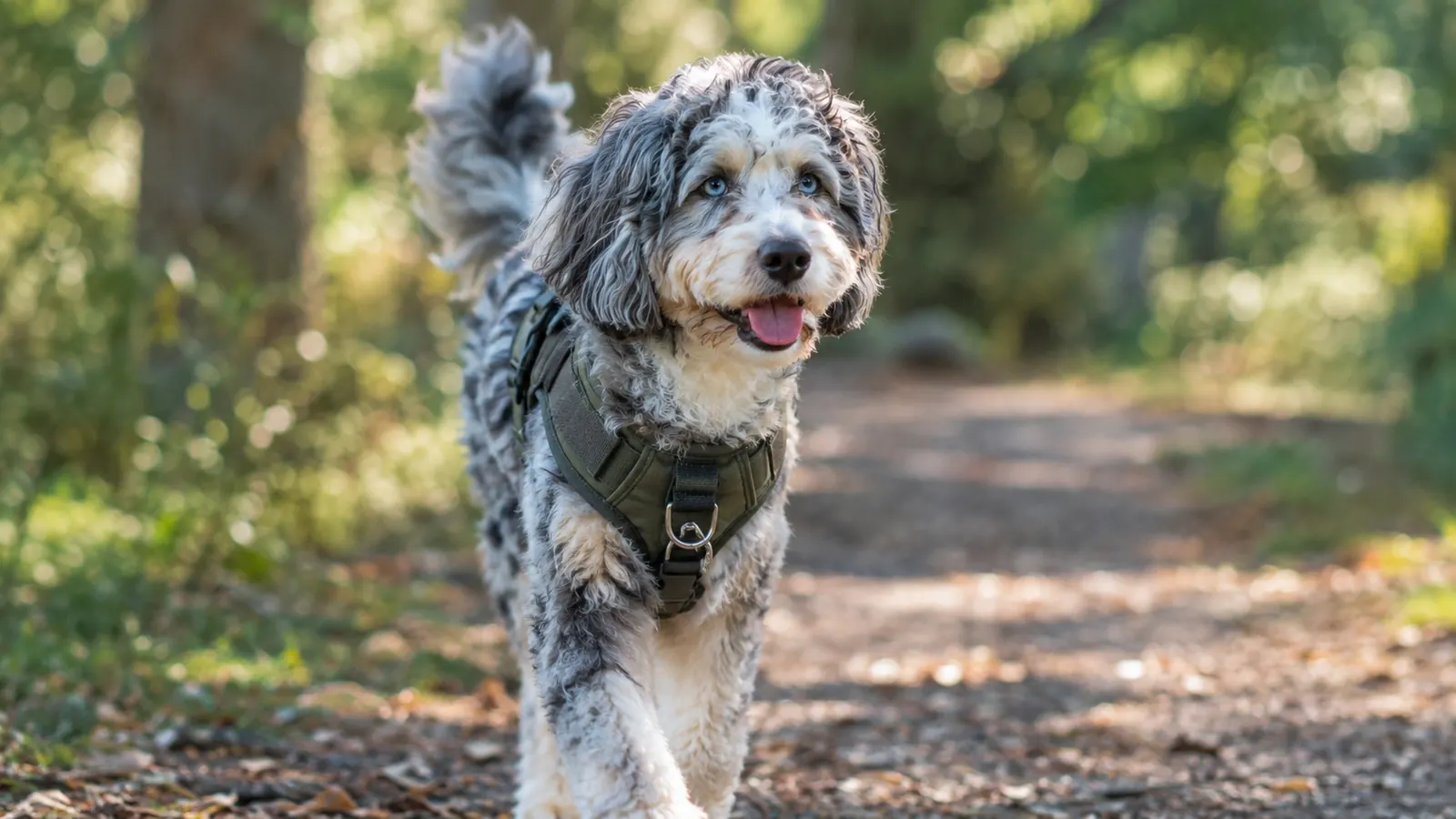
If you have an aussiedoodle, you already know the scene. A dog that is too smart for her own good, a coat that collects burrs and mats, and a morning walk that starts with you braced for the first pull. That was me and June for the first year. She came home at ten weeks old in October 2023, and by the time she was five months old, walking her on a flat collar meant one of us was always winning. The rabbitgoo harness changed that, and the front clip is the reason. Here are ten ways it helps an aussiedoodle, from a 48-pound standard who still has opinions about squirrels.
The front clip that made June's walks calm
The rabbitgoo No Pull Harness has a front clip and a back clip, padded straps and reflective strips. The front clip turns a pulling aussiedoodle back toward you instead of letting her drag you down the block. It is a tool, not training, but it is the tool that got us through the pulliest months.
Amazon Check Today's Price on Amazon →It turns her toward you the second she pulls
The front clip sits on the chest, so when June lunged after a rabbit or a leaf, the leash pulled her front end around toward me. She could not get her weight behind the pull the way she could on a collar. Within a few weeks, the lunge became a half-hearted step. The harness did not train her by itself, but it made the bad habit physically unsatisfying, and that gave us room to work on everything else.
It spreads pressure across her chest instead of her neck
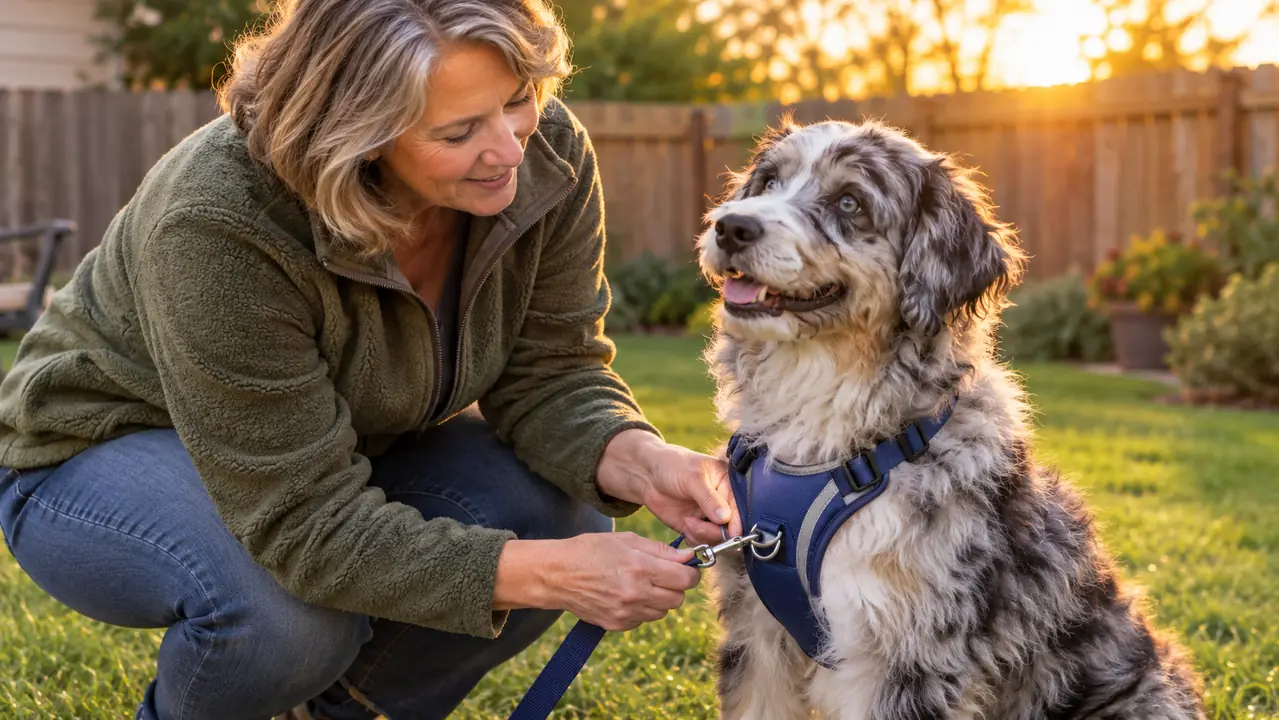
June has a delicate neck for a 48-pound dog, and the flat collar we started with put every ounce of her pulling right on her throat. The rabbitgoo harness spreads that force across the padded chest panels. When she did pull, she was not gagging or coughing, and I was not panicking about her trachea. For a smart, bouncy dog who still forgets herself on a deer trail, that padding is worth a lot.
The back clip gives you a second mode for trail walks
The same harness has a back clip, and that is the mode we use on weekend trail walks with my husband Dale. On the trail, June is allowed to range a little and sniff, and the back clip gives her more freedom while still keeping the harness secure. One harness, two jobs. We have used the same rabbitgoo harness since March 2024, and it still fits and still holds up.
It keeps the leash off her coat
An aussiedoodle's coat mats behind the ears, in the armpits and along the collar line. A collar sits right in one of the worst matting zones. The harness sits lower, on the chest and around the ribcage, so the leash never rubs against the fur on her neck. That is one less spot for tangles, and with a coat like June's, every less spot counts.
The strap line is easy to brush out after walks
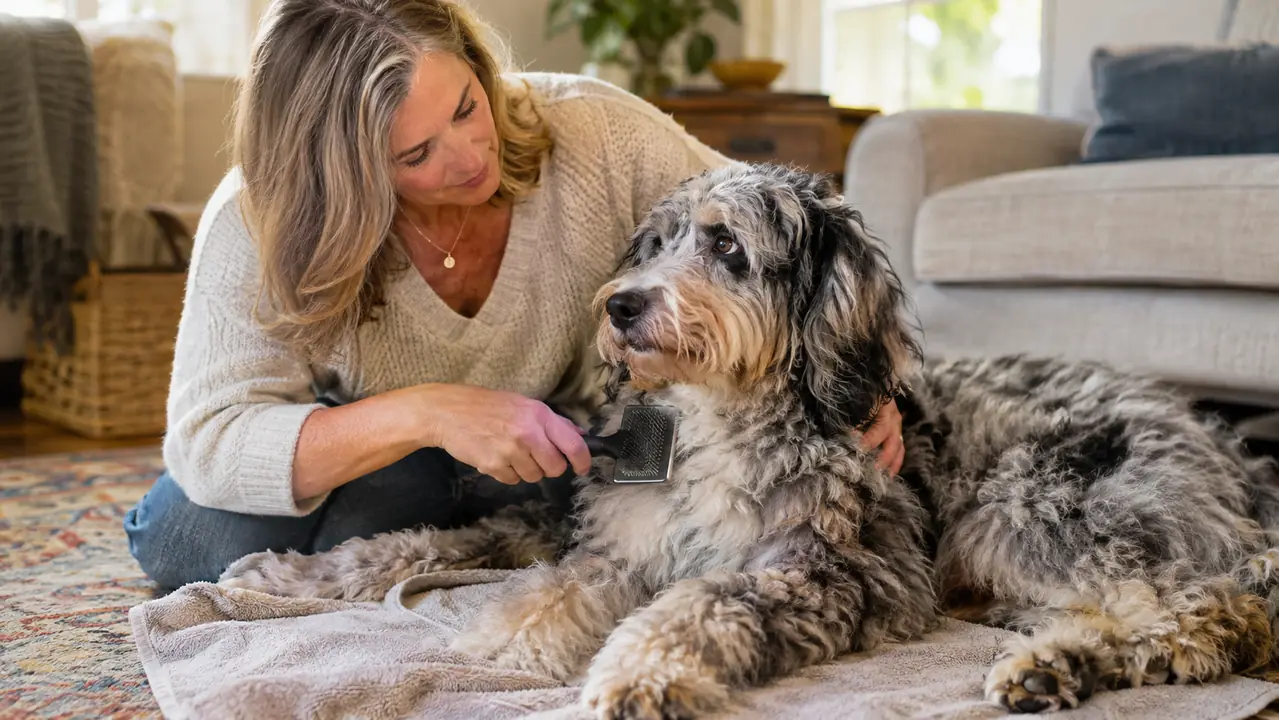
I will be honest: the chest strap can rub curls into tangles if you ignore it. I brush June's armpits and chest after walks, and the harness line has never turned into a mat. The trick is just doing it, and the harness makes it easy because the straps are accessible and the padding does not trap fur against the skin. A few minutes with the slicker and the steel comb keeps that area clear.
Reflective strips make early morning walks safer
I walk June about 45 minutes most mornings before my shift, which in fall and winter means it is still dark. The reflective strips on the rabbitgoo harness catch car headlights in a way a dark coat never will. June is blue merle, which blends into a dark morning beautifully and dangerously. The strips are the difference between a driver seeing a dog and seeing nothing.
It fits a deep-chested, curly dog without riding up
Aussiedoodles are not shaped like a simple tube. June has a deep chest and a narrow waist, and cheap harnesses slide around and end up twisted under her armpits. The rabbitgoo harness has adjustable straps, and once I set them for June, it stayed put. No chafing, no constant re-adjusting, no harness that ends up sideways by the end of the block.
It gives you a handle for the moments you need it
The harness has a handle on the back, and I did not realize how often I would use it. When June needs to cross a busy street, when she gets too interested in another dog, or when she is being lifted over a muddy patch on a trail, that handle lets me steady her without grabbing her collar or her coat. It is a small thing that becomes essential the first time you need it.
It survived two and a half years of aussiedoodle energy
June is three now, and the rabbitgoo harness has been through daily walks, weekend trails, backyard fetch and the occasional roll in something unidentifiable. The stitching has held, the clips still work, and the straps still adjust. I wash it when it gets muddy and it comes out looking like itself. For the money, I have not found anything that holds up better for a dog her size.
It made walks something I look forward to again
This is the honest one. Before the harness, I dreaded the morning walk. I would brace for the pull, and June would deliver it. Now we walk 45 minutes and she trots beside me, and when she does pull, the front clip turns her around and we keep going. The rabbitgoo harness did not make June a different dog. It made the walk a different experience, and that changed everything about how we start the day.
What I'd Skip
I would skip any harness that only has a back clip if your aussiedoodle still pulls. A back clip gives you no leverage against a 48-pound dog who has decided something across the street is urgent. I would also skip any harness with thin, unpadded straps, because a pulling aussiedoodle will turn those into rope burns on her armpits. And I would skip the idea that any harness replaces training. The rabbitgoo harness is a tool. It made the pulling manageable, and then we did the work of teaching June to walk loose. If you buy it expecting it to fix everything on its own, you will be disappointed, and that is not the harness's fault.
The front clip did not make June a different dog. It made the walk a different experience, and that changed everything about how we start the day.
The same harness June has worn since March 2024
If your aussiedoodle pulls on walks, the front clip on the rabbitgoo harness is the place to start. It turns her toward you when she pulls, spreads pressure across her chest, and gives you a back clip for trail days. It is a tool, not training, but it is the tool that got us through the pulliest months.
Amazon Check Today's Price on Amazon →