

I bought the rabbitgoo no pull harness in March 2024, when June was about seven months old and pulling like she had somewhere important to be. She is a standard Aussiedoodle, 48 pounds, blue merle with a wavy-curly coat, and at that age she treated every walk like a sled race. I had been walking her on a flat nylon collar and coming home with a sore shoulder and a dog who had no idea what I wanted. The rabbitgoo harness was the first thing that made walks feel like a conversation instead of a tug of war. Two and a half years later, I still use it almost every day. This is the honest version of that story, including the parts I did not see coming.
The Quick Verdict
The rabbitgoo harness is a well-made, comfortable front-clip harness that genuinely helped with June's pulling, but it is a tool, not a trainer. It will not stop pulling on its own, and the strap line can tangle a curly coat if you do not brush behind it.
Amazon Check Today's Price →If your dog pulls, this is the harness I would buy again
After 30 months of daily use, the rabbitgoo harness is still the one hanging on my hook by the front door. It turned June's pulling into a manageable habit and it has held up through thousands of walks.
Amazon Check Today's Price on Amazon →How I've Used It
June came home in October 2023 at ten weeks old. For the first few months she walked fine on a collar, and then her puppy brain switched on. From about five months old until she was a year, she pulled hard enough that I dreaded the morning walk. I tried stopping when she pulled, turning the other way, treating her for walking nicely. All of that helped at the edges, but the physical act of a 48 pound dog lunging at a squirrel while attached to my shoulder was wearing me down.
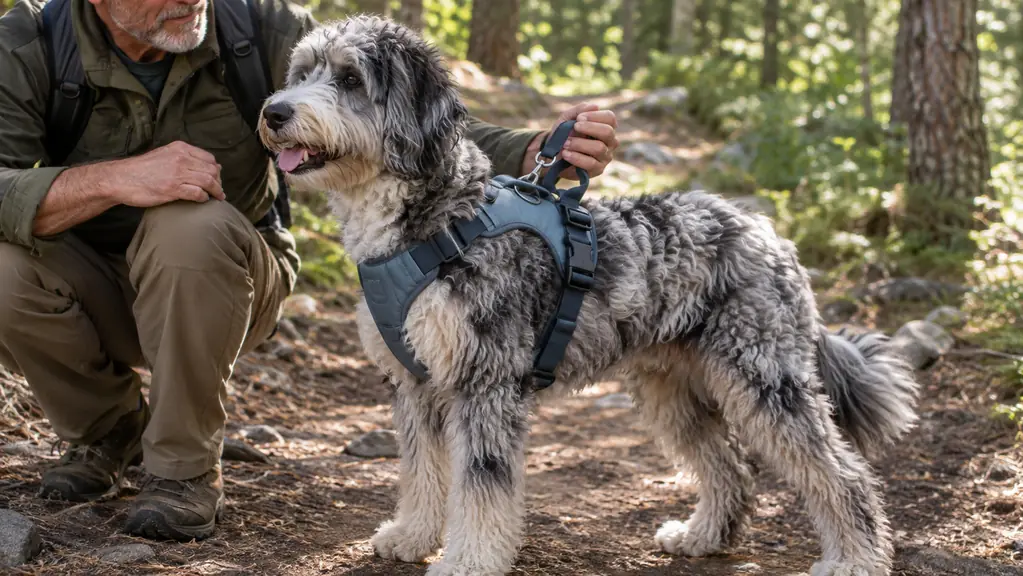
The rabbitgoo harness arrived in March 2024, size L. I remember fitting it on the front porch on a cool Saturday morning, with June dancing in circles and Dale holding her still while I adjusted the straps. It took me a few tries to get the fit snug without being tight. I use the front clip for our neighborhood walks, which are about 45 minutes most mornings before my shift. When Dale and I take June on weekend trail walks, I clip the leash to the back clip so she has more freedom to sniff and wander. That is the setup I have used for two and a half years, and it is the setup I am reviewing here.
The harness is a padded vest style with two leash clips, one on the chest and one on the back, plus adjustable straps and reflective strips. The front clip is the part that matters for pulling. When June pulls, the leash attachment at her chest turns her body toward me instead of letting her drag me forward. It does not hurt her, it does not startle her, it just changes the geometry so pulling becomes awkward instead of effective.
What Nobody Tells You About the Front Clip
Here is the thing I wish someone had explained before I bought it: the front clip is a tool, not training. The harness made pulling physically harder for June, and that gave me room to teach her what I actually wanted. But if I had just clipped it on and expected her to figure it out, we would still be having the same argument every morning. The harness worked because I used the pause it created to reward loose-leash walking. It bought me the space to train, and then the training did the lasting work.
The other thing nobody tells you: a front clip harness can look like it is working when the dog is simply learning to brace against it. For the first couple of weeks, June would lean into the front clip and pull with her chest instead of her neck. It was less jarring for me, but she was still pulling. What actually changed was consistency. Every time she hit the end of the leash, I stopped and waited. Every time she came back to my side, we moved again. The harness made that loop tolerable instead of exhausting.
I remember the exact morning it clicked. It was a Tuesday in late April 2024, about six weeks after the harness arrived. June spotted a rabbit at the edge of the neighbor's yard and launched herself forward. The front clip turned her in a half circle, and for the first time she stopped, looked back at me, and waited. I had been doing the stop and wait routine for weeks, and that morning it finally landed. We finished the walk with a loose leash for almost two full blocks. It was not magic, it was repetition finally adding up, but it was the moment I stopped wondering whether the harness was worth it.
The rabbitgoo harness did not stop June from pulling. It made pulling less rewarding, and that gave me the patience to teach her what I wanted instead.
The Coat Problem Nobody Warns Me About
This is the part I genuinely did not see coming, and it is the reason I am writing this review. June has a wavy-curly coat that mats behind her ears, in her armpits, and along her collar line. The harness strap sits right across her chest and under her armpits, which is exactly where her coat loves to tangle. After a few weeks of daily walks, I started finding little mats forming under the strap line, especially in the armpits.
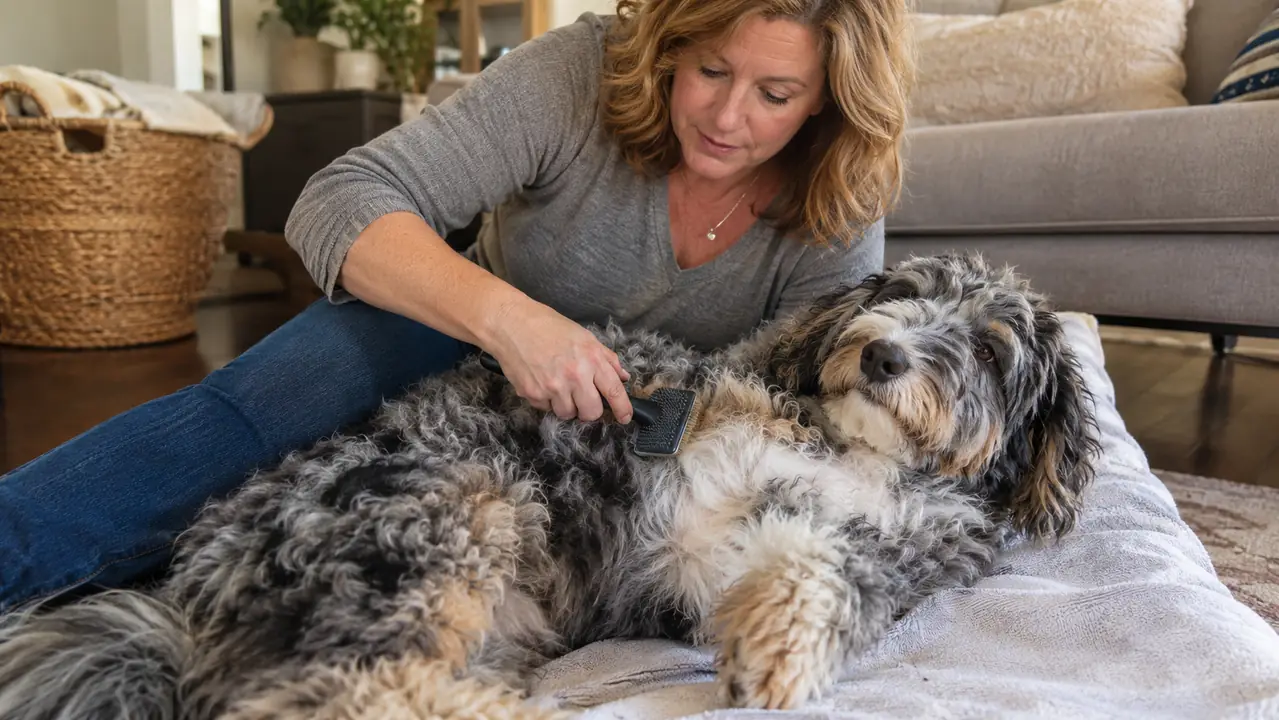
The fix is simple but it has to become a habit. I brush June's chest and armpits after walks, and I make sure the harness is not rubbing the same spot all day. She only wears it for walks, never around the house, so the strap line gets a break. On the days I skip the post-walk brush, I can feel the difference within a week. A slicker brush and a few minutes of line brushing handle it, and her groomer has never had to shave her down. But if you have a curly-coated dog and you do not brush behind the harness, you will be dealing with mats.
The worst stretch came in July 2024, when we had a run of hot, humid mornings and I got lazy about the post-walk routine. I would come home, wipe June's paws, and head for the shower, telling myself I would brush her that evening. By the third week, she had a mat the size of my thumb right where the strap crossed her chest. It took me twenty minutes of careful work with the slicker and the steel comb to get it out, and June was not patient about it. That was the week I started grabbing the brush from the basket by the back door as soon as the harness went back on its hook, so I could not miss it. I have not skipped the post-walk brush since.
The mat lesson came back around in September 2024, on a Saturday when Dale had the football game on and I was brushing June on the living room floor. I found a small tangle in her right armpit, about the size of a quarter, that I had missed all week because I had been rushing the evening brush. It was not as bad as the July mat, and the slicker worked it out in about ten minutes, but it reminded me that this is a daily job, not a twice a week job. Now I brush the strap line every single day, usually right after her walk while she is still standing by the back door, and the groomer has not had to shave a single patch in two and a half years.
How It Holds Up Over Time
June has worn this harness on thousands of walks. Morning neighborhood walks, weekend trail walks with Dale, rainy Tennessee days, hot summer mornings. The padding has stayed in place, the clips still click firmly, and the adjustable straps have not stretched or slipped. I wash it by hand when it gets muddy and hang it on the hook by the front door to dry. After two and a half years, it looks like a well-used piece of gear, not a worn-out one.
The reflective strips are still reflective, which matters on the dark winter mornings when I walk June before work. The buckles are easy to fasten and unfasten, even with cold fingers. The fit has stayed consistent through June's adult weight settling around 48 pounds. I have not had to replace it, and I have not wanted to.
One small thing I did not expect: the harness has survived being washed more times than I can count. June finds mud puddles the way other dogs find treats, and there were stretches in the spring of 2025 where I was rinsing it in the sink every other day. I use plain water and a little gentle soap, squeeze it dry in a towel, and let it hang overnight. The padding has never bunched up and the clips have never rusted or stiffened. For a piece of gear that lives outside in a Tennessee climate, that has impressed me.
The real test came in January 2025, when we had a full week of cold rain and June still needed her walks. I would come home soaked, hang the harness over the back of a kitchen chair, and it would still be damp the next morning when I clipped it on again. A cheaper harness might have gotten stiff or started rubbing, but the rabbitgoo padding stayed soft through that whole week, and the straps never lost their adjustment even when they were wet. That week alone convinced me the build quality is genuinely good, not just good for the price.
What It Does Not Do
I want to be direct about the limits, because the marketing around no pull harnesses makes big promises. The rabbitgoo harness does not stop pulling on its own. It does not turn a reactive dog into a calm one. It does not fix leash aggression, and it will not help if your dog is pulling because she is scared or overstimulated. For June, the pulling was mostly excitement and teenage energy, and the harness was the right tool for that. If your dog pulls because of fear or reactivity, a harness is not the answer. That is a conversation for a trainer or a vet.
It is also not a restraint device. I would not use it to tie June up anywhere, and I would not leave it on her in the crate or around the house. It is a walking tool, and I treat it that way.
And it will not fix a dog who is simply not getting enough exercise. June's pulling was always worse on days when she had been cooped up. The harness made those walks bearable, but the real difference came when we added evening fetch in the backyard and a treat puzzle on rainy days. A harness works with a tired dog. It does not replace one.
What I Liked
- Front clip genuinely reduces pulling by turning the dog toward you
- Padded and comfortable, June has never shown any sign of chafing
- Two clips mean one harness for both neighborhood walks and trail walks
- Held up through two and a half years of daily use
- Reflective strips help on early morning walks
- Easy to put on and take off, even with a wiggly dog
Where It Falls Short
- The strap line can tangle a curly coat if you do not brush behind it
- It is a tool, not training, and it will not stop pulling on its own
- The front clip takes a few walks to get used to, for both of you
- Not a solution for fear-based pulling or reactivity
Who This Is For
The rabbitgoo harness is for owners of strong, excited pullers who want a comfortable, well-made tool that makes walks manageable while they do the actual training. It is for people who will put in the consistency, because the harness gives you the space to teach but does not do the teaching. It is for curly-coated dog owners who are willing to add a few minutes of brushing after walks. And it is for anyone who wants one harness that works for both a structured neighborhood walk and a relaxed trail walk, because the two clips give you both.
I would also say it is for people who walk in the dark. I do the morning walk before my shift, which in Tennessee in December means I am out the door while the streetlights are still on. The reflective strips on the rabbitgoo harness are not a gimmick. When a car comes down our street, I can see the strips catch the headlights from a good distance, and that has made me feel a lot safer walking June in the winter.
Who Should Skip It
Skip the rabbitgoo harness if you are looking for a magic fix that will stop pulling with zero effort, because that product does not exist and this is not it. Skip it if your dog pulls out of fear or reactivity, because that needs a trainer or a vet, not a different clip. Skip it if you are not going to brush behind the strap line on a curly-coated dog, because the mats will find you. And if you already have a harness that fits well and you are only upgrading because an ad told you to, save your money. The harness is good. It is not a personality transplant for your dog.
I would also tell someone with a very small dog to think carefully about whether they need a no pull harness at all. A five pound dog pulling on a leash is a different problem than a 48 pound dog pulling on a leash. The rabbitgoo harness is built for dogs like June, and for a tiny dog it would be more hardware than the situation calls for. If your dog is small and the pulling is just a nuisance, a well-fitted collar and some training may be all you need.
The harness that made our morning walks calm again
Two and a half years in, the rabbitgoo harness is still the first thing I reach for. If your dog pulls, it is worth a try. Just remember to brush behind the straps.
Amazon Check Today's Price on Amazon →